Curated boutique health, wellness & performance products.
Flat $15 Shipping Australia-Wide.
Curated boutique health, wellness & performance products.
Flat $15 Shipping Australia-Wide.
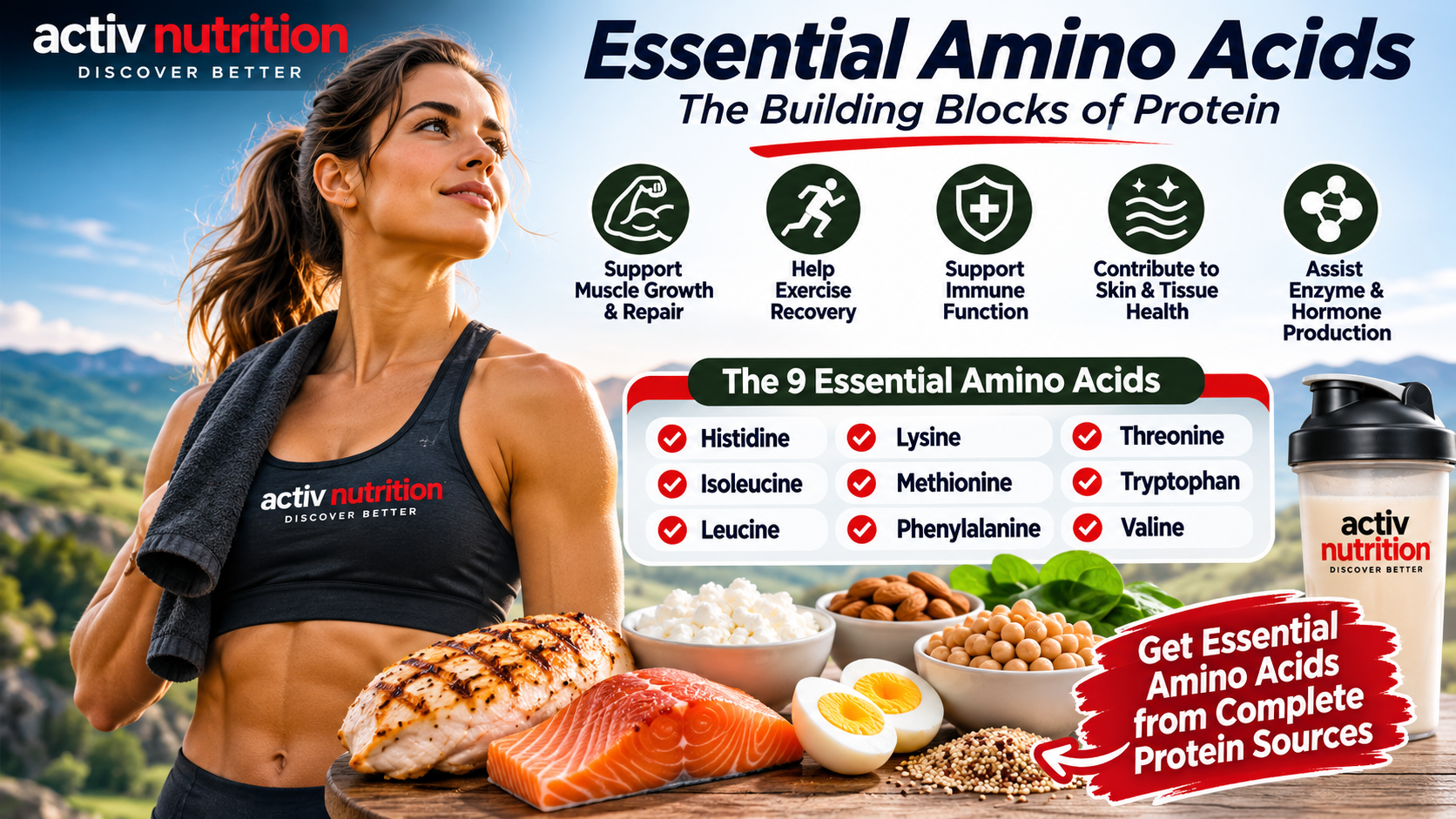
Amino acids are essential for human health, supporting everything from muscle growth and recovery to tissue repair, hormone production and normal immune function.
Whether you’re building muscle, improving your diet or maintaining an active lifestyle, understanding what amino acids do can help you make better nutritional decisions.
These compounds form the building blocks of protein. However, not all amino acids work in the same way. Some are produced naturally by the body, while others must be obtained through food.
So, how many amino acids are there, which ones are essential, and do you need supplements?
This guide explores the different types of amino acids, their functions, the best dietary sources and how adequate protein intake supports muscle recovery and overall wellbeing.
Amino acids are organic compounds that combine to form proteins. Proteins are essential components of muscles, skin, organs, enzymes and many other structures throughout the human body.
When you eat protein-rich foods, your digestive system breaks dietary proteins into smaller peptides and amino acids. These are absorbed and used to build, repair and maintain tissues.
The human body uses 20 standard amino acids to build proteins, each contributing to important biological processes.
A standard amino acid contains a central carbon atom attached to an amino group, a carboxyl group, a hydrogen atom and a variable side chain.
The side chain determines many of the amino acid’s chemical properties. For example, acidic amino acids such as aspartic acid and glutamic acid have negatively charged side chains at physiological pH.
These structural differences influence how proteins fold, interact and function within the body.
Amino acids are classified into three nutritional categories.
Understanding these categories helps explain why both protein quantity and protein quality matter.
There are nine essential amino acids required through the diet. Each contributes to normal physiological functions, including protein synthesis, tissue maintenance and metabolism.
| Essential Amino Acid | Primary Function | Food Sources |
|---|---|---|
| Histidine | Supports protein production and histamine synthesis | Meat, fish, dairy |
| Isoleucine | Supports muscle metabolism | Eggs, poultry, soybeans |
| Leucine | Helps regulate muscle protein synthesis | Whey, beef, dairy |
| Lysine | Supports collagen and protein production | Fish, eggs, lentils |
| Methionine | Supports sulfur metabolism and methylation | Eggs, fish, seeds |
| Phenylalanine | Precursor to tyrosine and neurotransmitters | Meat, dairy, soy |
| Threonine | Contributes to structural proteins | Dairy, eggs, legumes |
| Tryptophan | Precursor to serotonin and melatonin | Poultry, oats, milk |
| Valine | Supports muscle metabolism and protein synthesis | Dairy, meat, beans |
All nine essential amino acids are required for complete muscle protein synthesis. Consuming adequate amounts through a balanced diet helps support muscle maintenance and recovery.
Leucine is one of the most researched amino acids in sports nutrition. It belongs to the branched-chain amino acid group, alongside isoleucine and valine.
Leucine helps activate the mTORC1 signalling pathway, which is involved in regulating muscle protein synthesis. However, leucine alone cannot build complete muscle proteins. The body also requires the remaining essential amino acids.
Leucine-rich foods include whey protein, dairy products, eggs, poultry, beef, fish and soybeans. Whey protein is particularly popular among active individuals because it naturally contains all nine essential amino acids, including leucine.
Lysine contributes to protein synthesis, collagen formation and normal carnitine production. Collagen is an important structural protein found in connective tissues, including skin, tendons and ligaments.
Good lysine sources include meat, fish, eggs, dairy products and legumes.
Tryptophan is an essential amino acid involved in protein synthesis and the production of serotonin and melatonin. These compounds contribute to mood regulation and sleep-wake processes.
However, consuming additional tryptophan does not automatically improve mood or sleep quality. Dietary sources include poultry, dairy, eggs, soybeans, oats and seeds.
Amino acids contribute to numerous biological processes beyond muscle development. Their functions include tissue maintenance, enzyme production, hormone synthesis and normal immune activity.
Muscle protein synthesis is the process through which the body produces new muscle proteins. Resistance exercise stimulates muscular adaptation, while dietary protein provides the amino acids required for repair and growth.
When muscle protein synthesis exceeds muscle protein breakdown over time, muscle mass can increase. However, muscle development also depends on resistance training, adequate energy intake, sleep and recovery.
Physical activity places demands on muscles and other tissues. Following exercise, the body repairs and remodels muscle proteins as part of the recovery process.
Consuming sufficient protein helps supply the amino acids needed for these adaptations. Although amino acids support recovery, supplements do not guarantee reduced muscle soreness or faster recovery.
Maintaining muscle mass becomes increasingly important with age. Adequate protein consumption, combined with regular resistance exercise, can help support muscle strength and physical function.
Essential amino acids provide the building blocks required for muscle protein synthesis.
The body uses amino acids to produce antibodies and other proteins involved in immune responses. Certain amino acids, including glutamine, also contribute to immune cell metabolism.
However, taking additional amino acid supplements does not necessarily improve immunity in otherwise healthy individuals who already consume adequate protein.
Amino acids are required to produce structural proteins such as collagen, elastin and keratin. These proteins contribute to the maintenance of skin, hair and connective tissues.
Glycine and proline are particularly important components of collagen. A balanced diet containing adequate protein supports normal tissue maintenance.
Essential amino acids and branched-chain amino acids are often discussed together, but they are not identical.
Essential amino acids (EAAs) include all nine amino acids that must come from the diet. Branched-chain amino acids (BCAAs) include only leucine, isoleucine and valine.
BCAAs participate in muscle metabolism and signalling pathways associated with protein synthesis. However, building complete muscle proteins requires all nine essential amino acids.
Providing additional BCAAs without sufficient quantities of the other essential amino acids cannot fully support muscle protein construction. For individuals already consuming adequate high-quality protein, the additional benefits of standalone BCAA supplementation remain uncertain.
An EAA supplement provides all nine essential amino acids, while a BCAA supplement provides only three. For supporting muscle protein synthesis, a complete protein source or balanced EAA supplement generally offers a more comprehensive amino acid profile.
However, neither automatically replaces the benefits of meeting daily protein requirements through a balanced diet.
Not all amino acids commonly discussed in sports nutrition are essential under normal circumstances. Several non-essential or conditionally essential amino acids also perform important biological functions.
Glutamine contributes to nitrogen transport, intestinal cell metabolism and immune cell function. The body normally produces glutamine in substantial quantities.
Although glutamine supplements are marketed for exercise recovery, research does not consistently demonstrate additional muscle-building benefits in healthy adults who consume adequate protein.
Glycine is the smallest standard amino acid and an important component of collagen. It participates in several metabolic pathways and also acts as a neurotransmitter.
Glycine occurs naturally in protein-containing foods, particularly collagen-rich animal tissues.
Tyrosine is produced from the essential amino acid phenylalanine. It contributes to the production of dopamine, noradrenaline and adrenaline.
These compounds are involved in nervous system function and responses to stress. Tyrosine is found in dairy products, meat, fish, soybeans and other protein-rich foods.
The most practical way to obtain essential amino acids is through a balanced diet containing adequate protein. Both animal-based and plant-based foods can contribute to daily amino acid requirements.
These foods generally contain all nine essential amino acids in useful proportions. Whey protein, derived from milk, is another complete protein source commonly used in sports nutrition.
Some individual plant proteins contain relatively lower amounts of certain essential amino acids. However, consuming a variety of protein-rich plant foods throughout the day can help provide an adequate overall amino acid profile.
Plant-based proteins do not need to be combined within the same meal, provided overall dietary intake is sufficient and varied.
Daily protein requirements vary according to body weight, age, activity level and individual nutritional goals.
For generally healthy Australian adults aged 19–70, the recommended dietary intake is approximately 0.75 grams per kilogram of body weight for women and 0.84 grams for men.
People undertaking regular resistance training may benefit from higher protein intakes. Sports nutrition research commonly identifies 1.4–2.0 grams of protein per kilogram of body weight daily as a useful range for many exercising individuals.
For example, someone weighing 75 kilograms may aim for approximately 105–150 grams of protein daily when following this range.
Protein timing can influence muscle protein synthesis, but total daily protein intake remains a major consideration. Consuming protein across several meals provides repeated opportunities to supply amino acids to muscle tissue.
For many active adults, distributing protein across three or four meals is a practical approach. There is no universal requirement to consume a protein shake immediately after exercise.
Amino acid supplements can offer convenience, but they are not necessary for everyone. People who consistently meet their protein requirements through food may already obtain sufficient essential amino acids.
Supplementation may be useful when dietary intake is inadequate or when convenient protein options are limited.
Whey protein supplies all nine essential amino acids alongside other amino acids found in milk proteins. EAA supplements provide the nine essential amino acids in a concentrated form.
Both can stimulate muscle protein synthesis, but they differ in nutritional composition, energy contribution and suitability. Whey protein may be particularly practical for individuals looking to increase their total daily protein intake.
When comparing protein supplements, consider:
Explore the Activ Nutrition protein range to compare protein products suitable for different nutritional goals.
For those considering whey protein, Welltech Complete 100% Whey is one option to investigate when comparing complete protein supplements.
Supplements should complement nutritious meals rather than replace a balanced diet.
Amino acids are organic compounds that form the building blocks of proteins. They support muscle growth, tissue repair, enzyme production, hormone synthesis and normal immune function. The human body uses 20 standard amino acids to construct proteins.
There are 20 standard amino acids used to build human proteins. Nine are essential and must come from food, while the remaining 11 can normally be produced by the body, although some become conditionally essential.
There are nine essential amino acids: histidine, isoleucine, leucine, lysine, methionine, phenylalanine, threonine, tryptophan and valine. All nine must be obtained through dietary protein.
Essential amino acids are amino acids the body cannot produce in sufficient quantities. They must come from food and are required for muscle protein synthesis, tissue maintenance and normal metabolic functions.
Amino acids help build and repair proteins, maintain muscles and tissues, produce enzymes and hormones, and support normal immune function. Certain amino acids also serve as precursors to neurotransmitters.
Branched-chain amino acids, or BCAAs, are leucine, isoleucine and valine. They contribute to muscle metabolism and protein synthesis, but all nine essential amino acids are needed to build complete muscle proteins.
No. Amino acids are the components that make up proteins. Proteins consist of amino acid chains linked by peptide bonds. During digestion, dietary proteins are broken down into smaller peptides and amino acids.
Standard amino acids contain an amino group, a carboxyl group, a hydrogen atom and a variable side chain attached to a central carbon atom. Their structures influence how they function within proteins.
Yes. A balanced diet containing adequate protein can supply all nine essential amino acids. Complete protein sources include eggs, dairy, fish, meat and soy. Varied plant-based diets can also meet essential amino acid requirements.
Not necessarily. Most healthy adults can obtain sufficient amino acids through food. Adequate daily protein intake, resistance training and recovery are generally more important than taking standalone amino acid supplements.
Amino acids are fundamental to human health, supporting protein synthesis, muscle maintenance, tissue repair and numerous metabolic processes.
For active individuals, the priority should be consuming adequate dietary protein, maintaining a balanced diet and following a consistent training programme.
Understanding the differences between essential amino acids, BCAAs and other amino acids can help you make more informed decisions about nutrition and supplementation.
At Activ Nutrition, the focus is on helping customers understand what they consume and choose products that align with their individual nutritional needs.
Better nutrition begins with understanding what your body needs, not simply taking more supplements.
For further scientific information, refer to the National Institutes of Health guidance on dietary supplements for exercise and athletic performance.
Disclaimer: This article provides general nutritional information and does not replace individual medical or dietetic advice. Nutritional requirements vary between individuals.