Curated boutique health, wellness & performance products.
Flat $15 Shipping Australia-Wide.
Curated boutique health, wellness & performance products.
Flat $15 Shipping Australia-Wide.
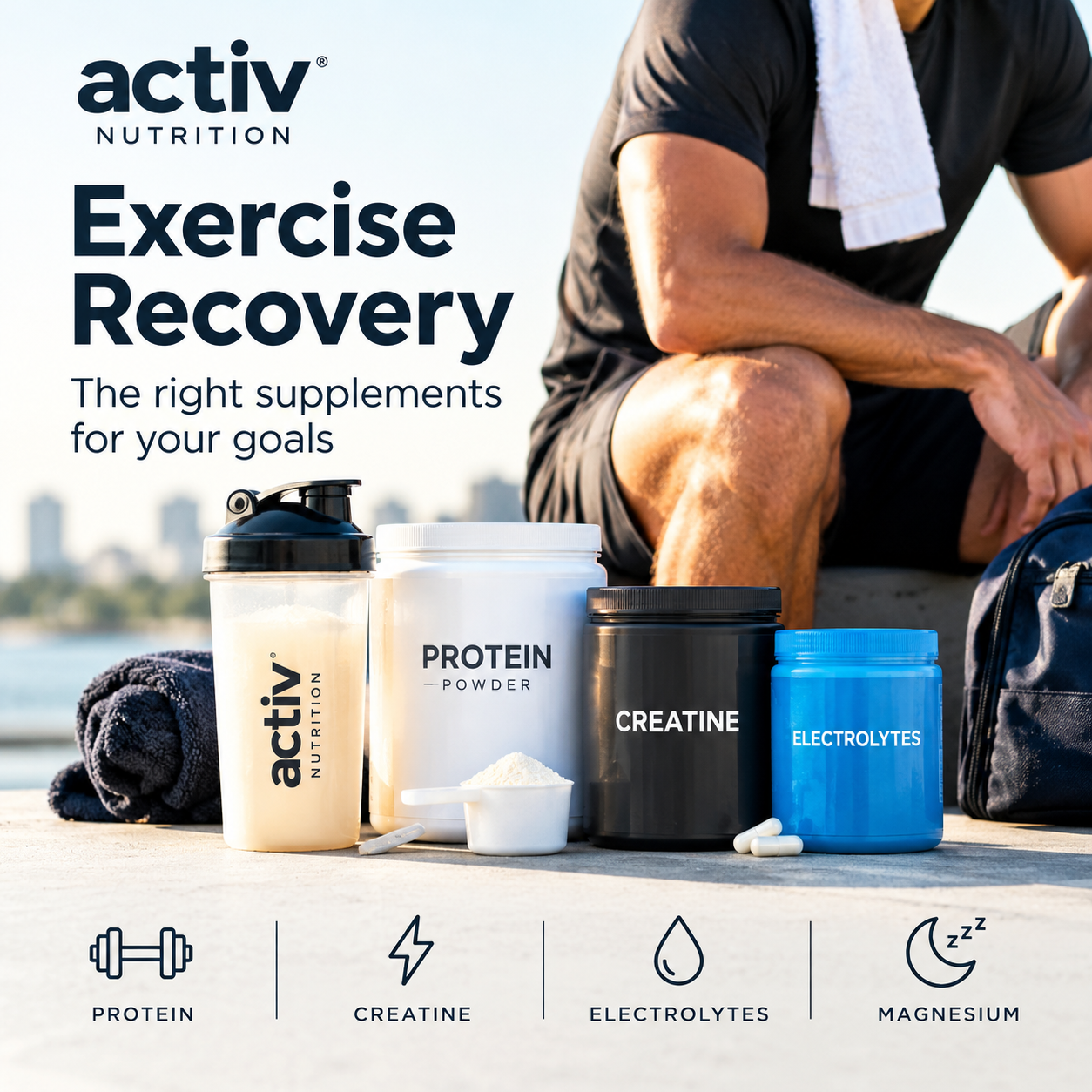
Choosing supplements for exercise recovery can feel complicated. Protein powders, creatine blends, electrolytes and magnesium products all appear in the same shopping journey, yet they serve different purposes.
The right starting point is your recovery need. Are you struggling to eat after training, replacing sweat losses or looking to support repeated high-intensity exercise? Answering that question helps you choose more carefully and avoid paying for ingredients that do not address your situation.
This guide explains where common post-exercise supplements fit, what to check on the label and when a normal meal may be enough.
Recovery involves replenishing energy stores, supporting muscle repair and replacing fluid lost through sweat. Your needs depend on the session, your usual diet and how soon you will train again.
Sports Dietitians Australia’s recovery nutrition guidance explains how food and fluids contribute to this process. A demanding training schedule may require a more deliberate plan than occasional recreational exercise.
Build your routine around regular meals, adequate sleep and a manageable training load. Carbohydrate foods help replenish fuel, while protein provides building blocks for muscle repair. Supplements can make meeting these needs more convenient, particularly when appetite, travel or work makes eating difficult.
Consider yoghurt with oats and fruit, or a meal containing rice, vegetables and chicken, tofu or legumes. These examples combine carbohydrate and protein. Adjust portions to your appetite and training demands, and include fluids.
The Australian Institute of Sport’s Group A supplement frameworkincludes protein supplements, electrolyte products and creatine for specific evidence-based uses. This classification applies to ingredients and protocols; it does not endorse every product containing them.
Protein powder can help you meet protein needs when a meal is inconvenient or your normal intake falls short. Its value is practical: a portable shake may be easier than preparing food immediately after training.
Protein-rich foods remain valid options. When comparing powders, look at protein per serving, ingredients, allergens and how comfortably you digest the product. A larger scoop does not necessarily mean more protein.
Compare products using the amount of protein you receive, rather than tub size alone. Consider whether you need a dairy-free option and whether added ingredients serve a purpose. Avoid assuming that a more complicated formula is automatically better.
Creatine has a different role from a protein shake. The AIS creatine resource explains that supplementation can increase muscle creatine stores and improve high-intensity exercise performance.
This makes creatine relevant to some strength and repeated-effort training programmes. However, evidence for performance benefits should not be translated into a promise that one post-workout serving will eliminate soreness.
If you are comparing combined products, Activ Nutrition’s Hydration Creatine Formula provides an example of a creatine and electrolyte blend. Review the full ingredient amounts and directions to assess whether both components suit your needs.
Choose a product because its ingredients match your goals. If you already use another creatine product, check for duplication before adding a blend. The number of products in your routine is less useful than understanding what each contributes.
Electrolytes help regulate fluid balance and normal muscle function. An electrolyte product may be convenient after substantial sweating, particularly during prolonged exercise or hot conditions.
However, your usual food and fluids also contribute to replacement. A short, easy session does not automatically require a specialised recovery drink.
Read the label carefully: an electrolyte drink and a carbohydrate-containing sports drink are not interchangeable. If you also need to replenish energy, check whether the product supplies carbohydrate or whether you need food alongside it.
Magnesium contributes to normal muscle and nerve function and energy production, as outlined in the NIH magnesium fact sheet. Food sources include legumes, nuts, seeds, whole grains and leafy vegetables.
That essential role does not establish that everyone needs a magnesium supplement after exercise. Avoid treating post-training soreness alone as proof of a deficiency.
If inadequate intake is a concern, discuss your diet with a qualified health professional. Supplemental magnesium can cause diarrhoea and interact with some medicines, making suitability more important than marketing claims.
When browsing Activ Nutrition’s sports supplements range, use the same questions for every option:
Sport Integrity Australia’s supplement guidance recommends a food-first approach. Where supplements are used, checking independent batch testing helps reduce prohibited-substance risk, but does not remove it completely. Verify the specific batch rather than relying on branding.
The best exercise recovery supplements are those that address a genuine need within your routine. You may benefit from the convenience of protein, a suitable hydration option or a targeted performance supplement. You may also find that food and fluids already cover your needs.
Explore the Activ Nutrition shop with a clear purpose, compare labels and choose only what fits. For personalised advice, particularly if you have a medical condition or take medicines, speak with an accredited sports dietitian, pharmacist or doctor.
Creatine has stronger established evidence for repeated high-intensity performance and training adaptations than for relieving post-exercise soreness. It may suit an athlete’s broader training plan, but should not be presented as a guaranteed recovery treatment.
Yes. Risks include side effects, medication interactions, excessive intake and contamination. Combining products can duplicate ingredients. Follow directions and check suitability with a qualified health professional. Competitive athletes should also check independent batch testing.
Some do, for specific purposes. Protein can help meet dietary needs, while creatine can support high-intensity performance. Results depend on the ingredient, amount, training and individual circumstances. A supplement cannot compensate for an inadequate overall routine.
Start by identifying a genuine need. Protein may offer convenience when meals are impractical; electrolytes may help replace substantial sweat losses. Creatine may suit certain performance goals. None is automatically necessary for everyone who exercises.
Creatine is one evidence-supported option for repeated high-intensity efforts. However, performance and capacity mean different things across sports. Choose according to your activity and goals rather than expecting one supplement to improve every type of exercise.
No product should be assumed to “soften” muscles or eliminate soreness. First review your training load, food, fluids and rest. Persistent, severe or unusual pain warrants professional assessment rather than adding another supplement.
No. Supplements cannot replace adequate sleep. Treat sleep as a core part of your recovery routine, alongside nutrition and an appropriate training schedule.
No account yet?
Create an Account